
tried
Welches Wort hörst du?
Vervollständige die Sätze. Höre zu und schreibe das fehlende Wort. Es gibt bis zu zehn Fragen.

Irezumi mark out Tokyo festival - 25th May 2026 Alles anzeigen
The annual three-day Shinto festival Sanja Matsuri in Tokyo's historic Asakusa district is dedicated to three local deities, two brothers and a village headman, who founded Senso-ji temple, Tokyo's oldest Buddhist temple.
In addition to music, dancing and joining in parades, local parishioners ferry the spirits of these gods around Asakusa in 'mikoshi'. These miniature replicas of their shrine are bounced wildly to entertain the gods and bring blessings to all Asakusa's homes and businesses.
An equally rare sight is the array of traditional Japanese tattoos. Despite being an ancient artform, it isn't socially acceptable to have 'irezumi' on open display owing to their recent use in 'yakuza' organised crime syndicates.
It was common in yakuza culture for gang members to adorn their bodies with a full covering of intricate irezumi to prove their endurance, loyalty and financial status. Yet irezumi have served many other purposes.
Tattooed marks identified criminals during the Edo period, from 1603 to 1868, when tradesmen also adopted irezumi both to express their identity and as permanent talismans. It was popular for firemen, labourers and craftsmen to sport designs related to their trade and cover their bare skin.
For over 70 years following 1868, tattoos were prohibited by law, and 'onsen' hot springs, gyms and even pools still require that they're covered.
However, as irezumi are part of the culture underpinning this community festival in the low city, its residents take the rare opportunity to be seen as they are, like Masaki Oyama.
Masaki Oyama: "I try not to show them while I'm at work to avoid any trouble for my company. So I make sure they don't show. Even on my days off, I wear long sleeves. It's not like I'm consciously trying to hide anything in particular, but I've been doing it for so long. That's just how it is."
Irezumi are gradually gaining wider acceptance as the current generation embraces body art, making its presence more commonplace. The rise in tattoo-friendly premises and cultural gatherings, where 'wabori' tattoos and their western counterparts can be appreciated, is marking this trend. Weniger anzeigen
Vervollständige die Sätze. Höre zu und schreibe das fehlende Wort. Es gibt bis zu zehn Fragen.
Lies die vier Sätze. Bringe sie in die gleiche Reihenfolge wie in der Meldung.
Lies die Sätze. Wähle die richtige Präposition. Es gibt bis zu vier Sätze.
Bilde Sätze. Wähle jedes Wort in der richtigen Reihenfolge aus. Es gibt bis zu drei Fragen.
Vervollständige die Sätze. Höre zu und schreibe die fehlenden Wörter auf. Es gibt bis zu fünf Fragen.
Lies die fünf Sätze. Wähle das richtige Verb.
Lies die Sätze. Finde die Leerzeichen zwischen den Wörtern. Es gibt bis zu fünf Fragen.
Lies die fünf Sätze. Finde die fehlenden Großbuchstaben.
Bringe die Satzteile in die richtige Reihenfolge. Jeder Satz besteht aus vier Teilen. Es gibt bis zu fünf Fragen.
Bei einem Wort sind die Buchstaben in der falschen Reihenfolge. Lies den Satz. Buchstabiere das Wort richtig. Es gibt bis zu zehn Fragen.
Vervollständige die Sätze. Wähle für jede Lücke den richtigen Vokal aus. Es gibt bis zu fünf Sätze.
Vervollständige die Sätze. Wähle das richtige Wort aus. Es gibt bis zu fünf Fragen.
Prüfe, wie schnell du den Artikel lesen kannst. Wähle deine Geschwindigkeit und lies jede Zeile des Textes. Übe und verbessere deine Lesegeschwindigkeit!
Höre dir den Nachrichtenbeitrag Zeile für Zeile an und spreche den Inhalt nach. Achte dabei auf möglichst originalgetreue Betonung und Aussprache. Nimm deine Stimme auf und höre dir das Ergebnis an.
Either you did not allow SensationsEnglish to access your email address or your social account doesn't have that, please provide it here.
By clicking “Create Account” above you are accepting our Terms of Service & Privacy Policy.

 Add to homescreen


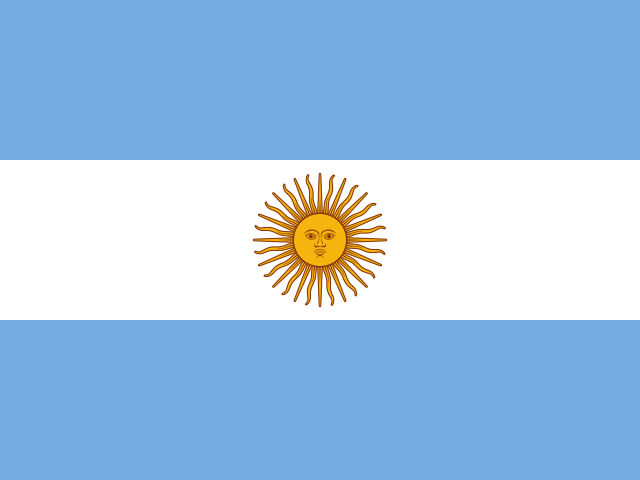 Argentina
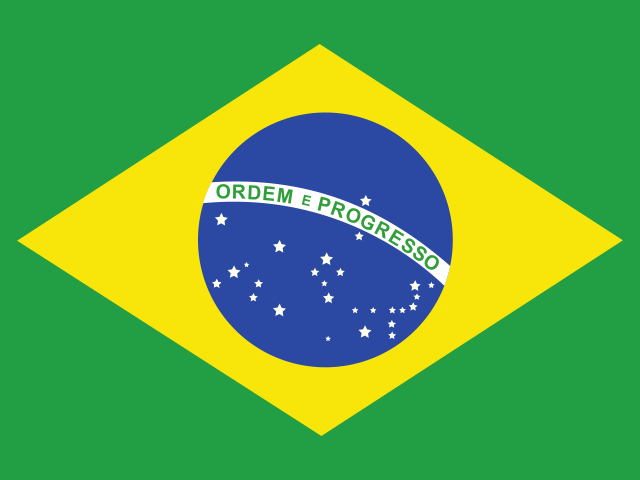 Brazil
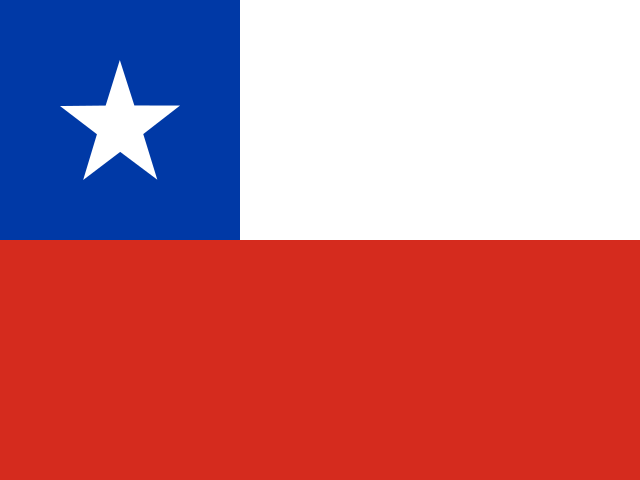 Chile
Chile
 France
 Germany
 Indonesia
 Italy
Italy
 Japan
Japan
 Kazakhstan
 Nigeria
 Poland
 Spain
Spain
 Turkey
 United States
 Uzbekistan